8 hr
Mallorca Multi-Transport Island Adventure
- Expert local guide
- Small group
- Skip-the-line access
- Free cancellation
Mallorca Island Tour Bus Train Tram and Boat — Valldemossa & Soller
Vintage railways through citrus groves, monastery cloisters where Chopin composed
Compare fares, pick the fit — all bookings are mobile-voucher and eligible for free cancellation where shown.
8 hr
8 hr 30 min
| Experience | Duration | Rating | Transfers | Pickup | Skip-the-line | Free cancel. | Price | |
|---|---|---|---|---|---|---|---|---|
|
Guided Experience
Most popular
Mallorca Multi-Transport Island Adventure
|
8 hr | ★ 4.4 | ✓ | ✓ | ✓ | ✓ | €103 | Book → |
|
Guided Experience
Mallorca Grand Tour: Mountains, Coast & Historic Railways
|
8 hr 30 min | ★ 4.5 | ✓ | ✓ | ✓ | ✓ | €102 | Book → |
|
Standard Entry
Mallorca Multi-Transport Adventure: Train, Tram & Boat
|
Full day | ★ 4.3 | — | — | — | ✓ | €65 | Book → |
Worth it for culture seekers and scenic train enthusiasts
The mallorca island tour bus train tram and boat package delivers solid value if you're visiting both Valldemossa and Soller. The 12.50 EUR Cartoixa entrance grants access to the monastic complex, Chopin's cells, pharmacy museum, and cloistered gardens with mountain views—roughly 90 minutes of exploration. The real draw is the vintage wooden train from Palma to Soller (27 km through the Tramuntana range), followed by the heritage tram down to Port de Soller and an optional boat return. Combined transport and admission easily exceed 40 EUR separately. The package works best for visitors who want curated stops without rental car logistics. It's skippable if you're driving independently or uninterested in guided pacing—Valldemossa's charm extends beyond the monastery, and the tram segment is brief. Mid-afternoon crowds at the Cartoixa can compress your visit window, so morning departures justify the bundled cost better.
Bottom line: If you value scenic rail heritage and hassle-free village hopping, the mallorca island tour bus train tram and boat package delivers more than the sum of separate fares.
Hand-picked experiences loved by thousands of travelers
6 to 8 hours
Free Cancellation
Journey through Mallorca's mountain villages, ride the vintage tram, and explore charming coastal ports
2 hours
Free Cancellation
Explore Mallorca's dramatic northern coastline by speedboat with swimming stops at hidden coves
4.5 - 10 hours
Free Cancellation
Explore two stunning Mallorcan villages nestled in the Tramuntana mountains with coastal views
8 hours
Free Cancellation
Experience Mallorca's dramatic coastline and mountain scenery via vintage railway, historic tram, and scenic boat cruise
5-6 hours
Free Cancellation
Experience Mallorca's historic railway and tramway on a scenic half-day adventure through mountains and coast
7 hours
Free Cancellation
Intimate 7-hour journey through Mallorca's mountain villages, coastal views, and sunset panoramas
8 hours
Free Cancellation
Journey through mountain monasteries, dramatic coastal roads, and vintage railways on this all-day island exploration
5 hours
Free Cancellation
Ride a vintage wooden train through mountain tunnels, then take a scenic tram to the Mediterranean coast
Built in 1309, this former royal residence showcases the grandeur of the early Mallorcan monarchy and offers a glimpse into medieval life.
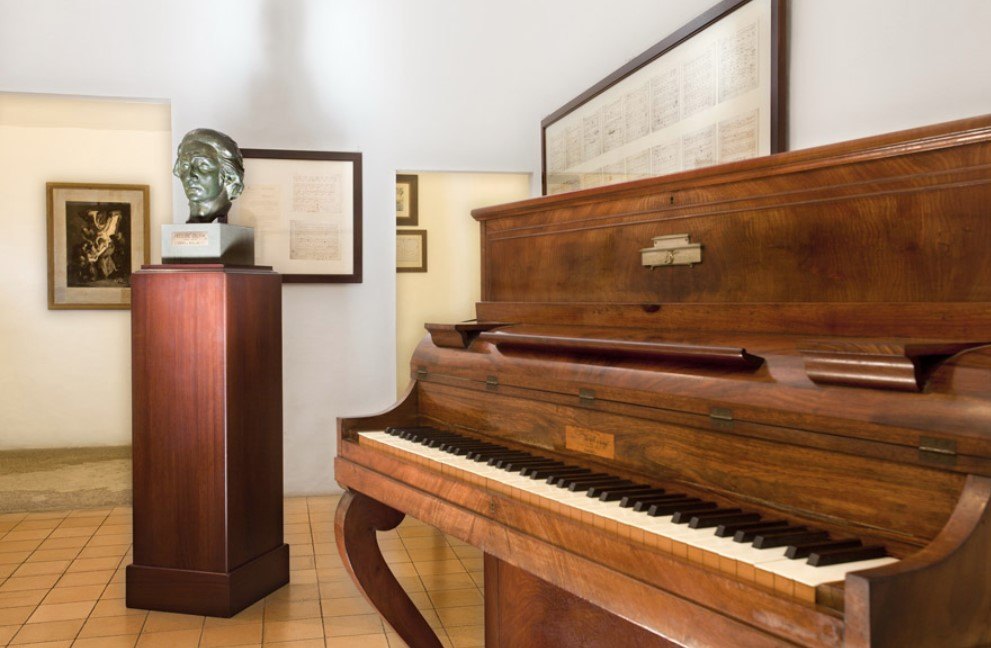
This cell is the most famous part of the complex, where Frédéric Chopin and George Sand spent the winter of 1838.
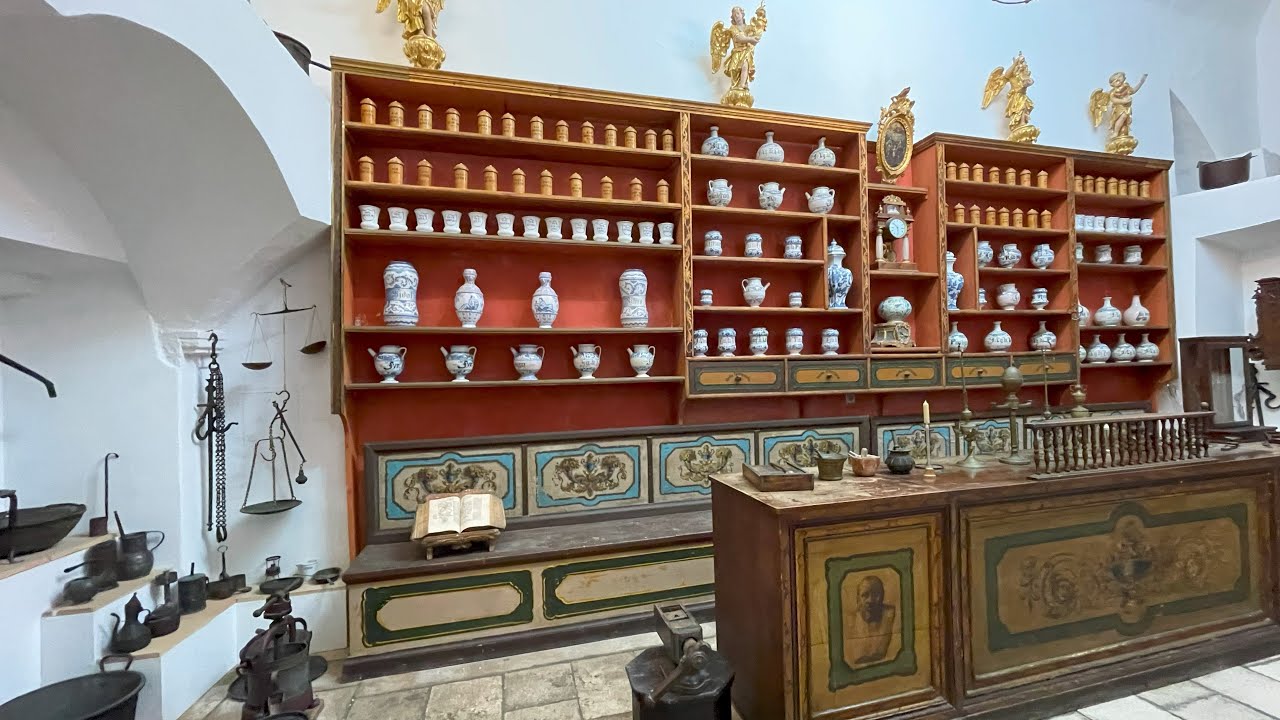
Preserved from the monastic era, this pharmacy still contains antique apothecary jars and instruments used by the monks.
The gallery features diverse works, including paintings by Joan Miró, highlighting the monastery's long-standing connection to the art world.
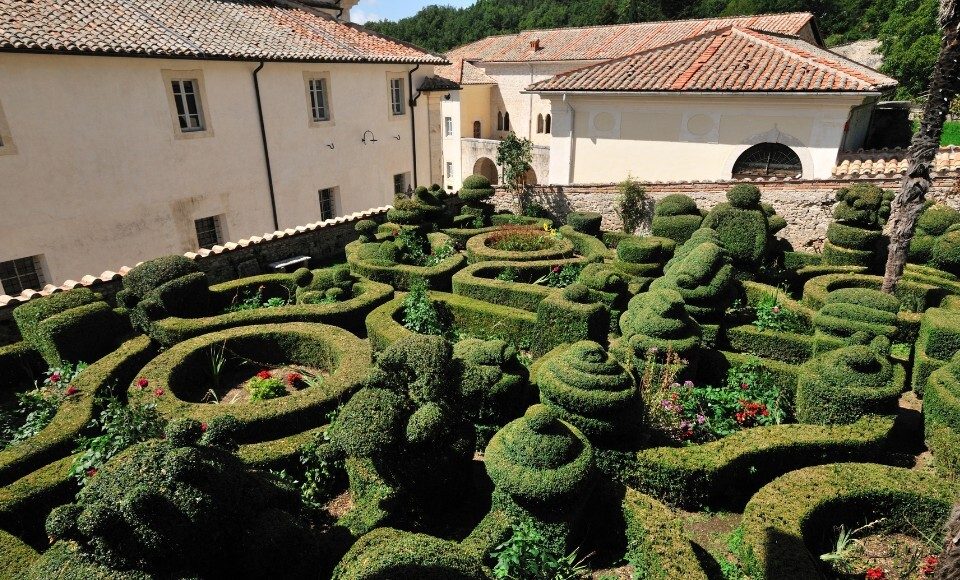
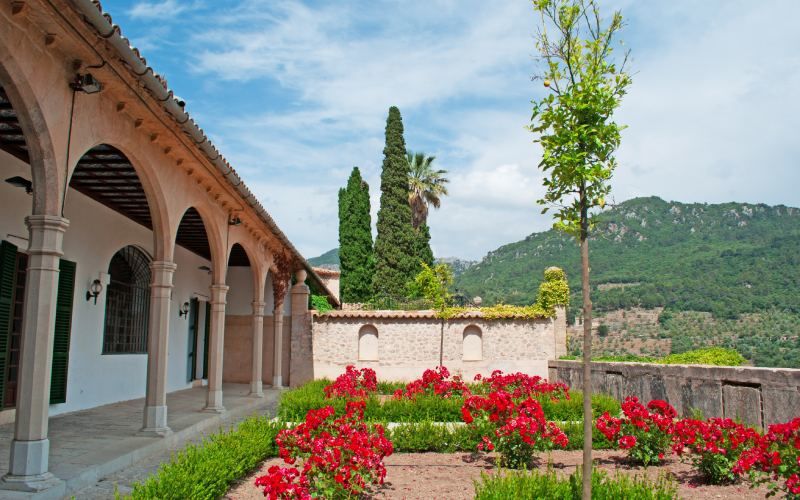
These tranquil, high-walled gardens are perfect for experiencing the silence the monks sought for 400 years.
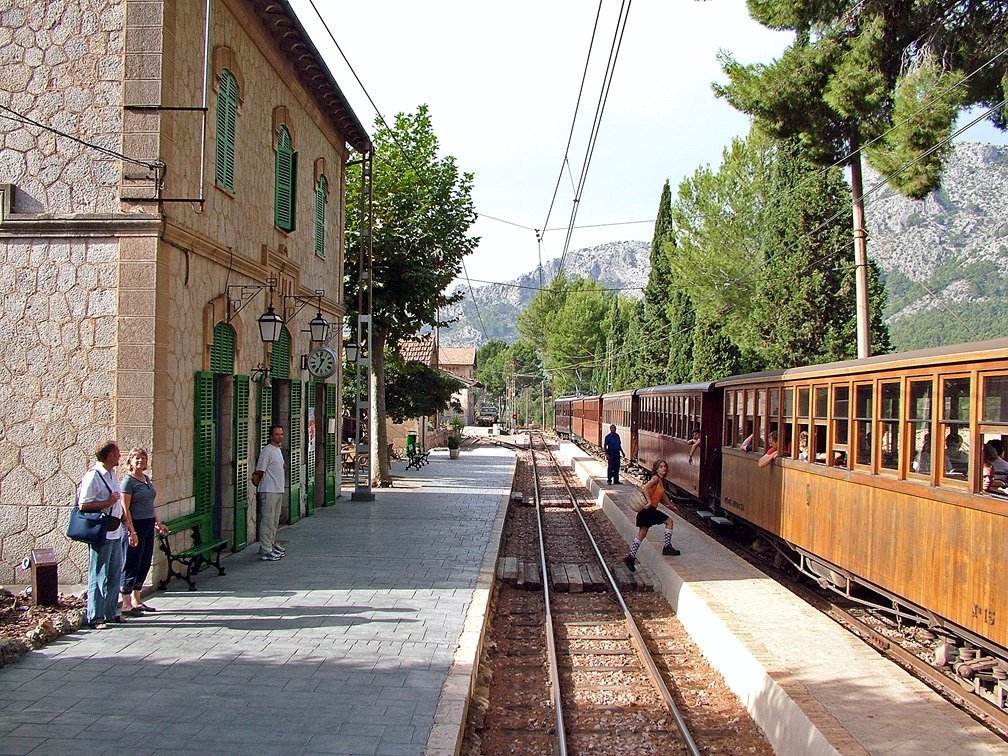
You board the vintage train at Palma's Plaça d'Espanya terminus, settling into slatted wooden seats as the locomotive pulls away from the platform at 10:15.
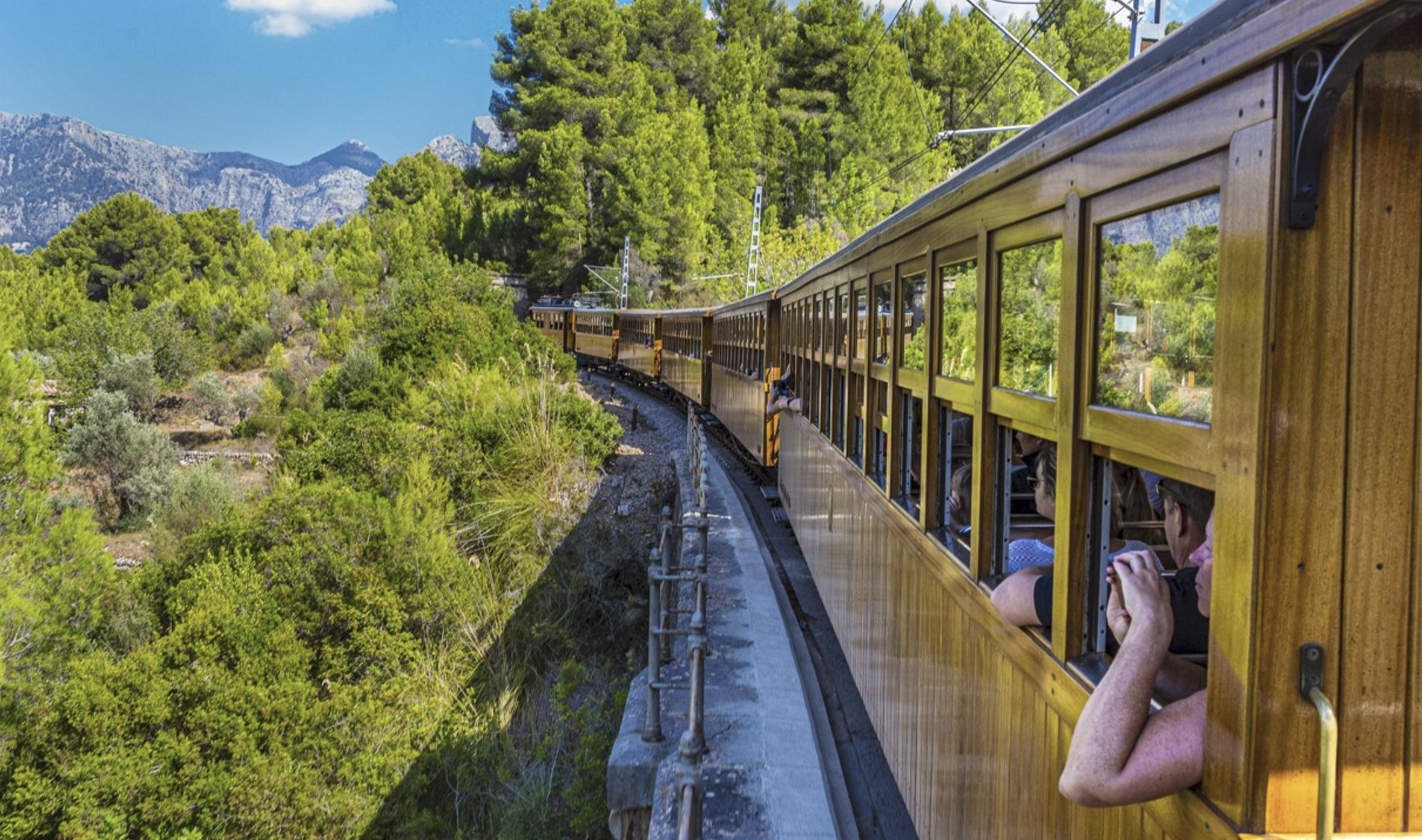
The carriage windows slide open manually, letting citrus-scented air flood the compartment as the track enters the first of thirteen tunnels through the Tramuntana massif. Thirty-five minutes into the journey you pass through the Bunyola valley, where stone farmhouses cling to terraced slopes planted with olive and almond.
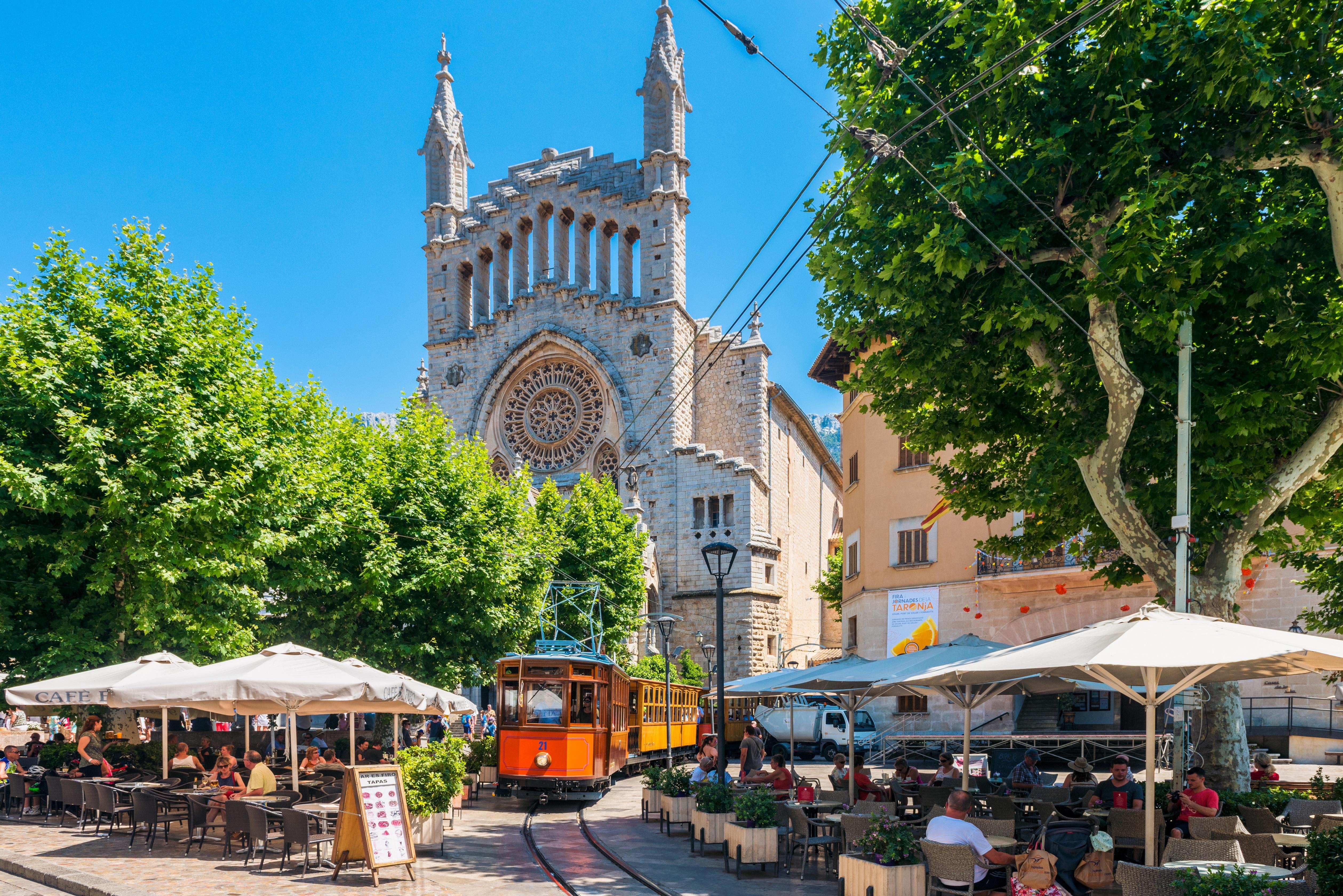
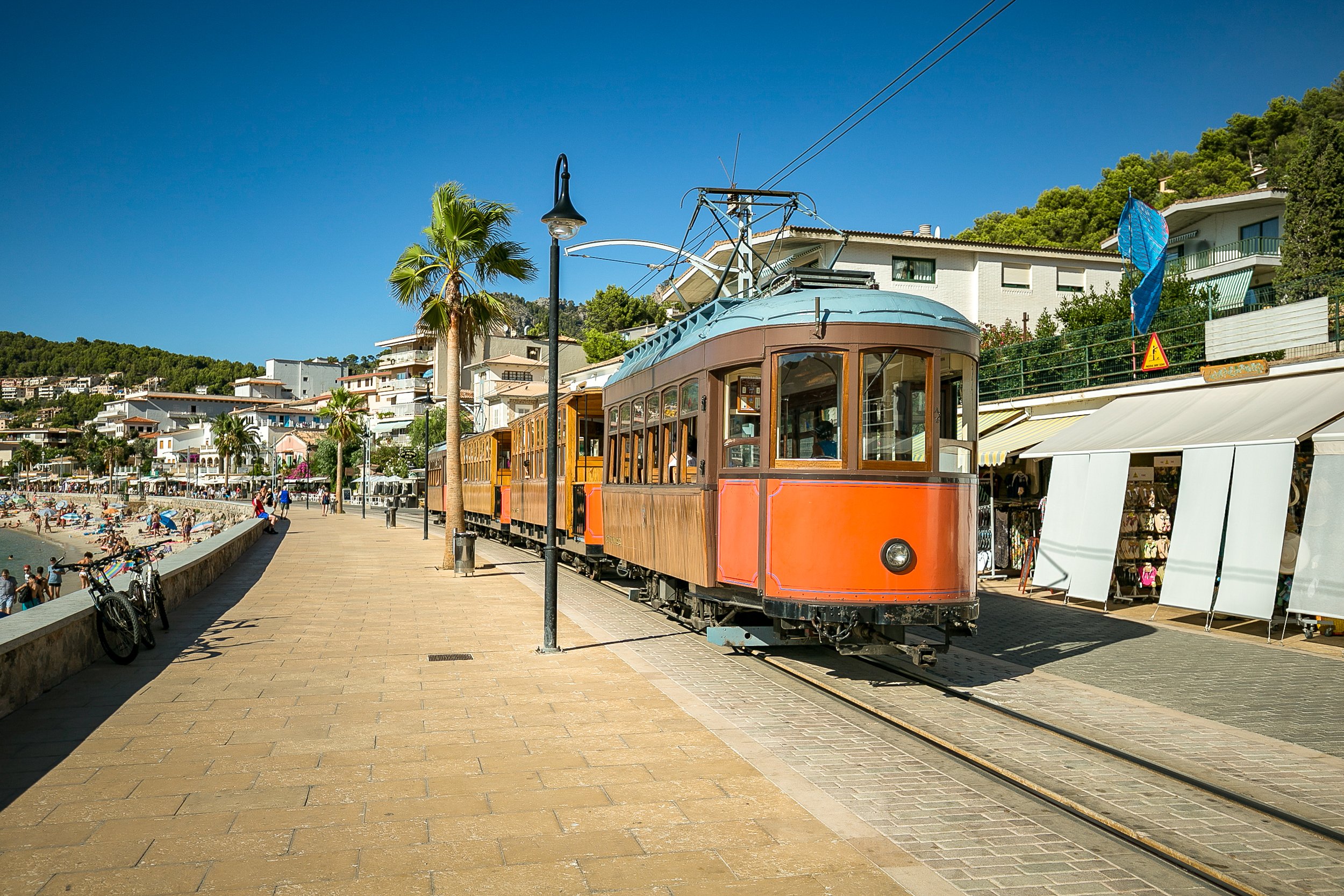
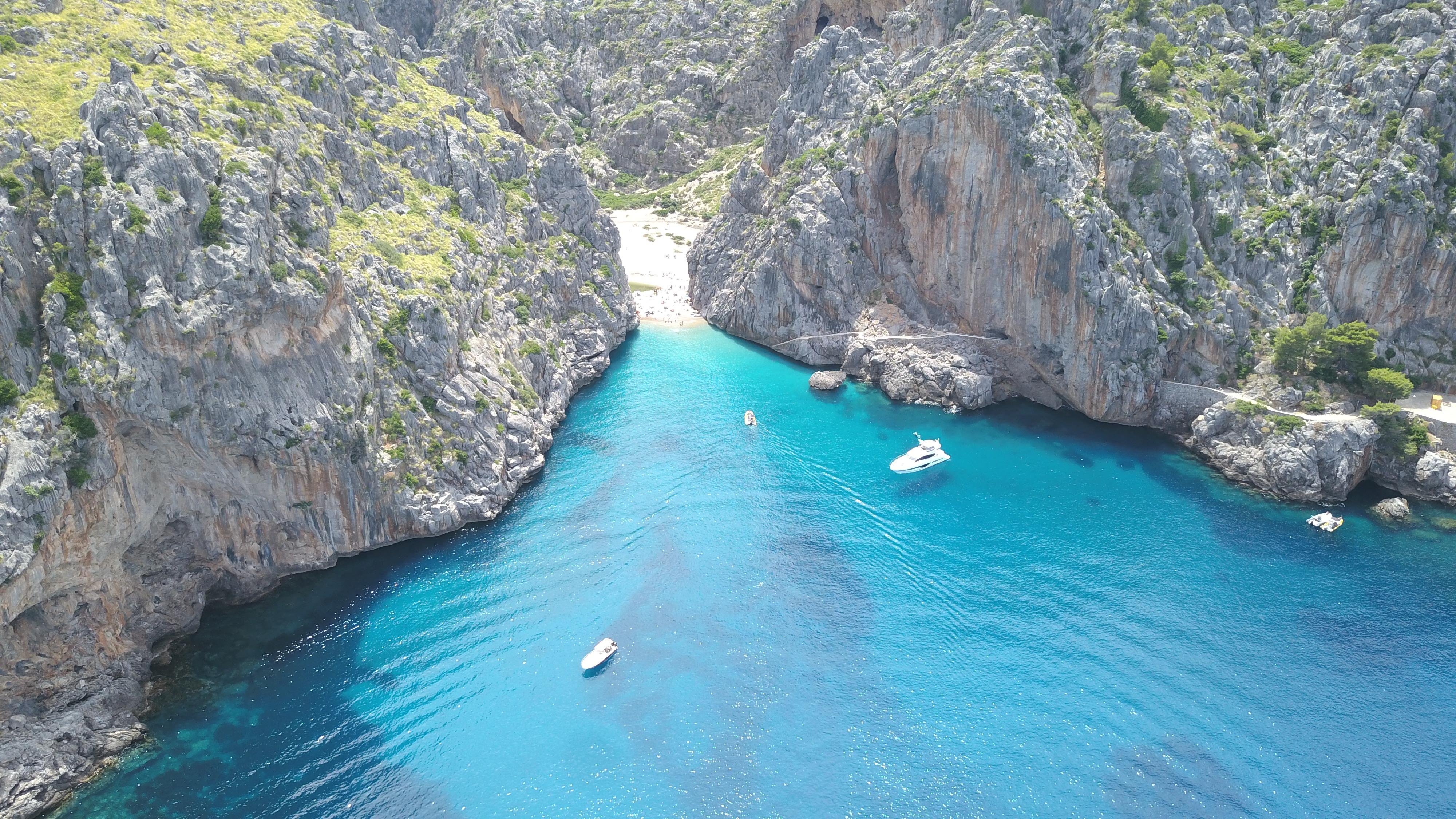
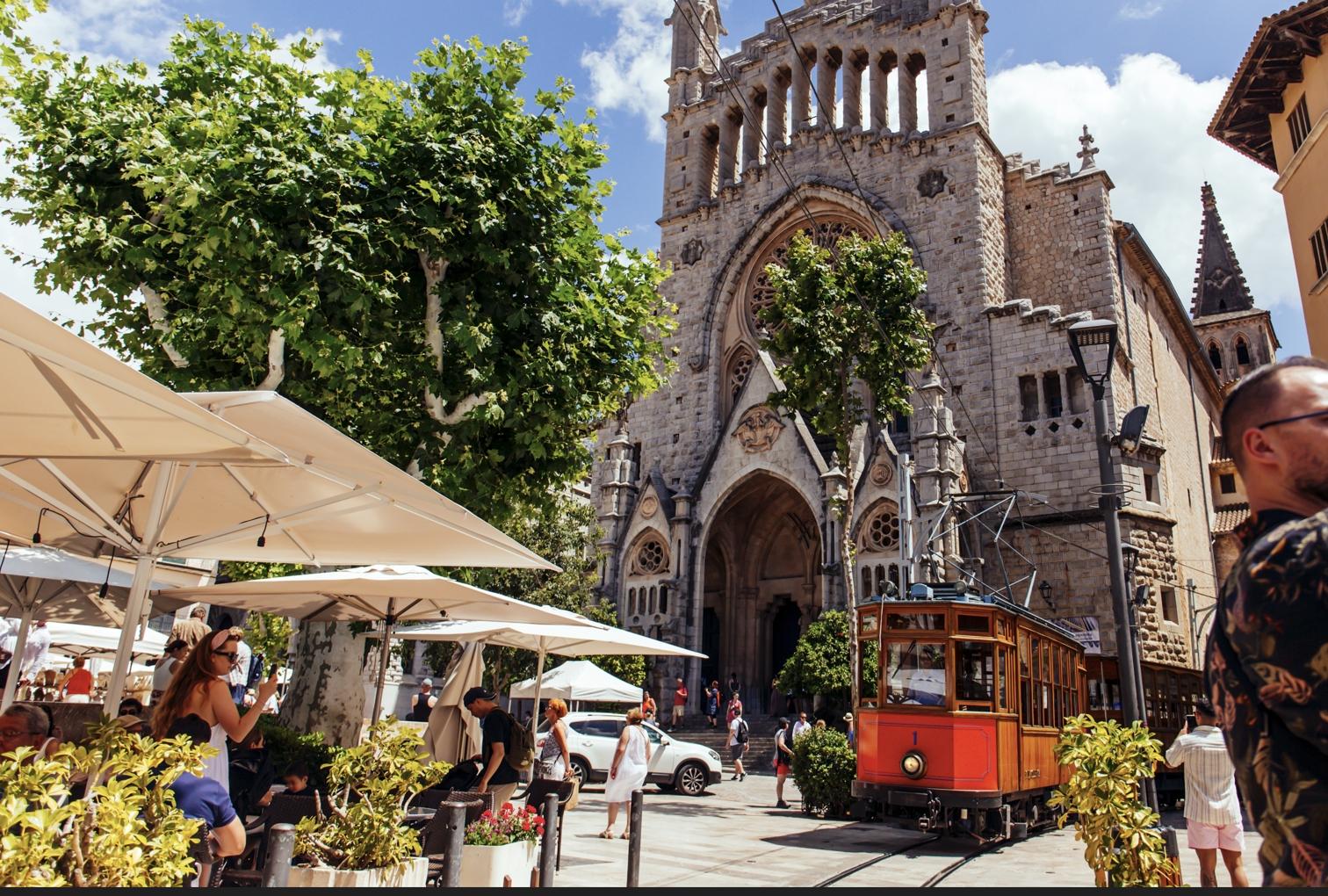
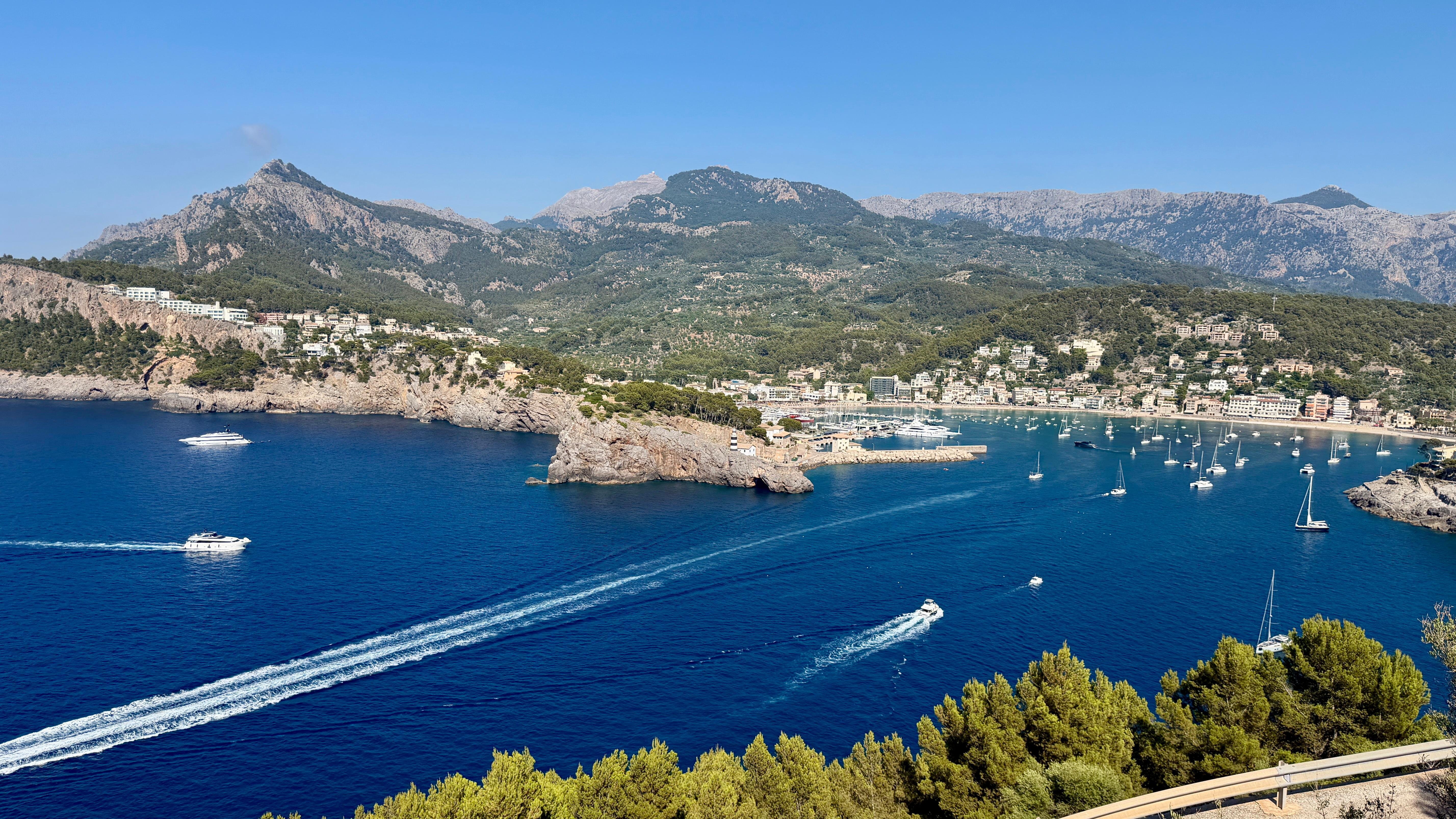
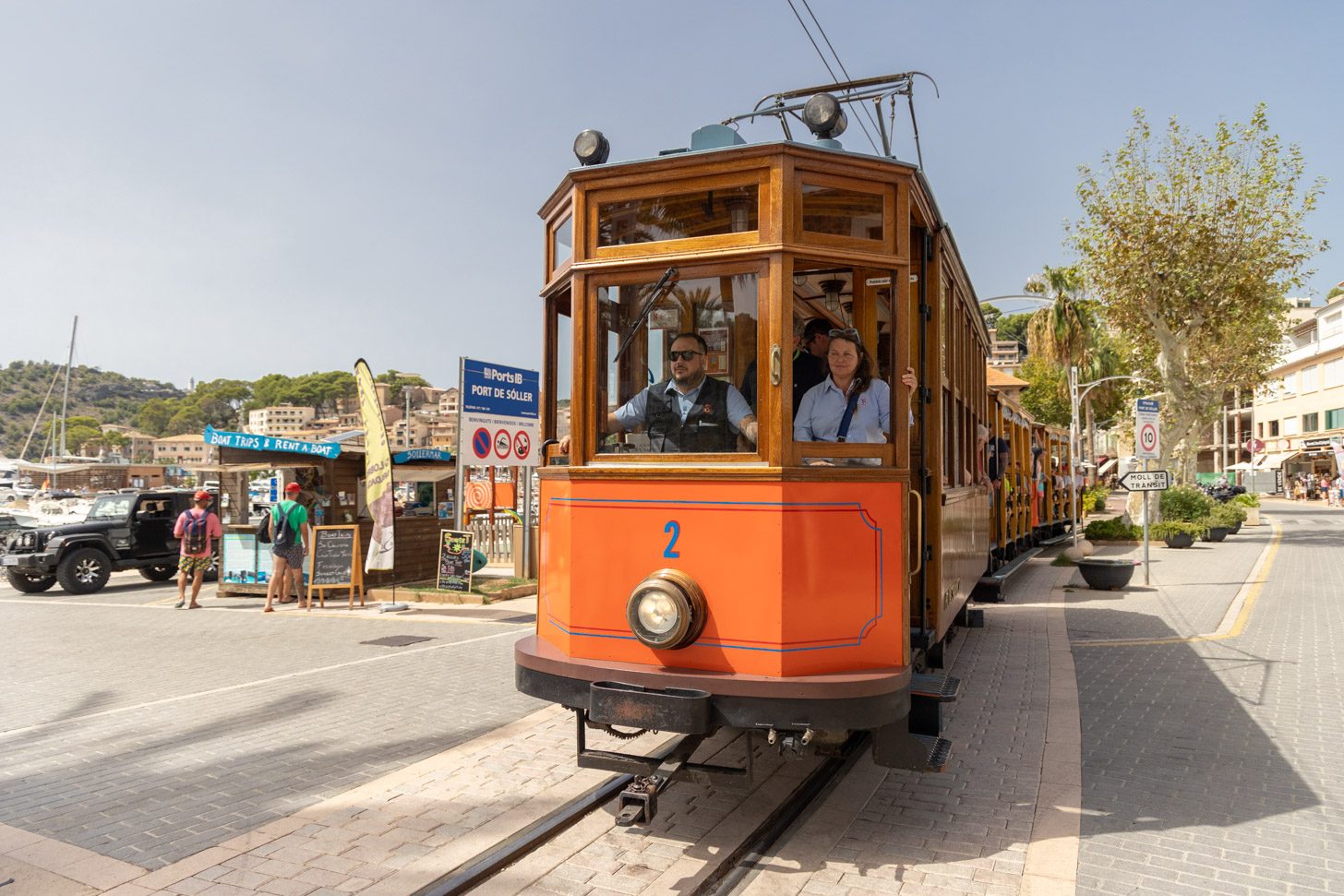
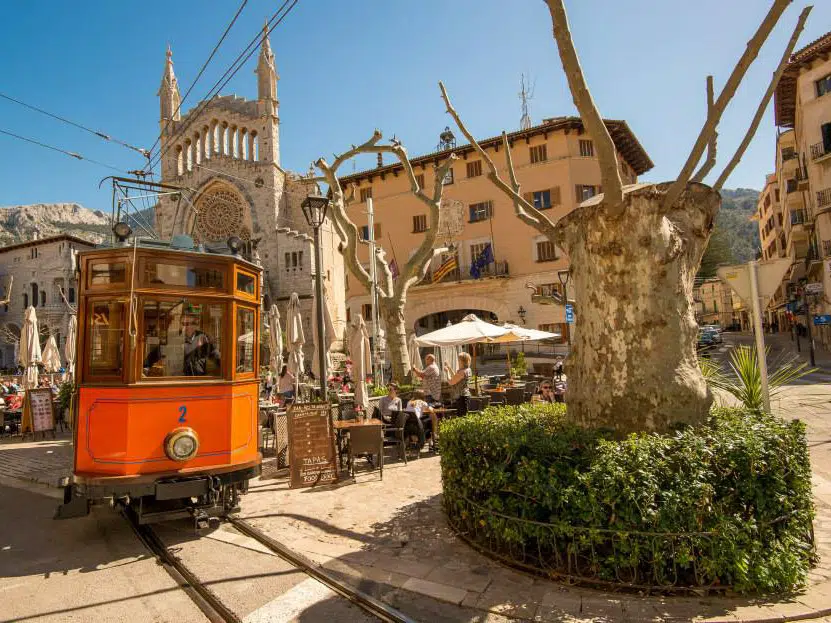
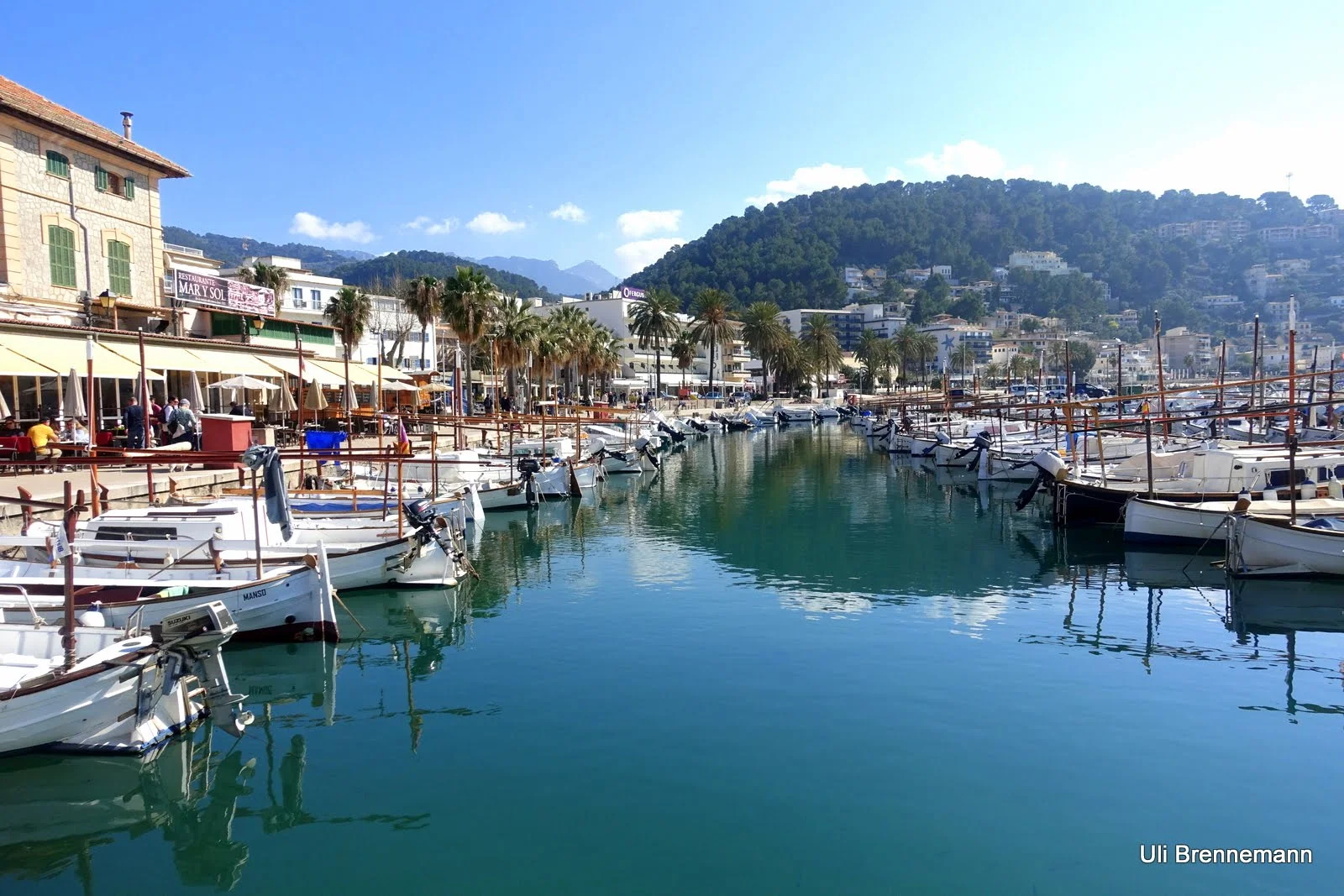
Arriving in Soller, you transfer to the open-sided tram that rattles downhill toward Port de Soller, its single overhead wire sparking at junctions. The tram halts beside the harbor's horseshoe bay, where fishing boats unload morning catches onto the quay. You walk the pier to board a small excursion vessel that traces the coastline north toward Sa Calobra, the cliffs rising three hundred meters directly from the waterline.
Returning to Soller by mid-afternoon, you join a coach climbing the switchback road to Valldemossa. At the monastery you pass through the refectory and climb stone stairs to Chopin's cell, where the composer's manuscripts rest under glass. The prior's cell opens onto a private garden overlooking the valley, the view framed by cypresses planted in the seventeenth century. You exit through the pharmacy arcade at 16:30, the last guided group of the day.
All the details about your upcoming adventure in one place
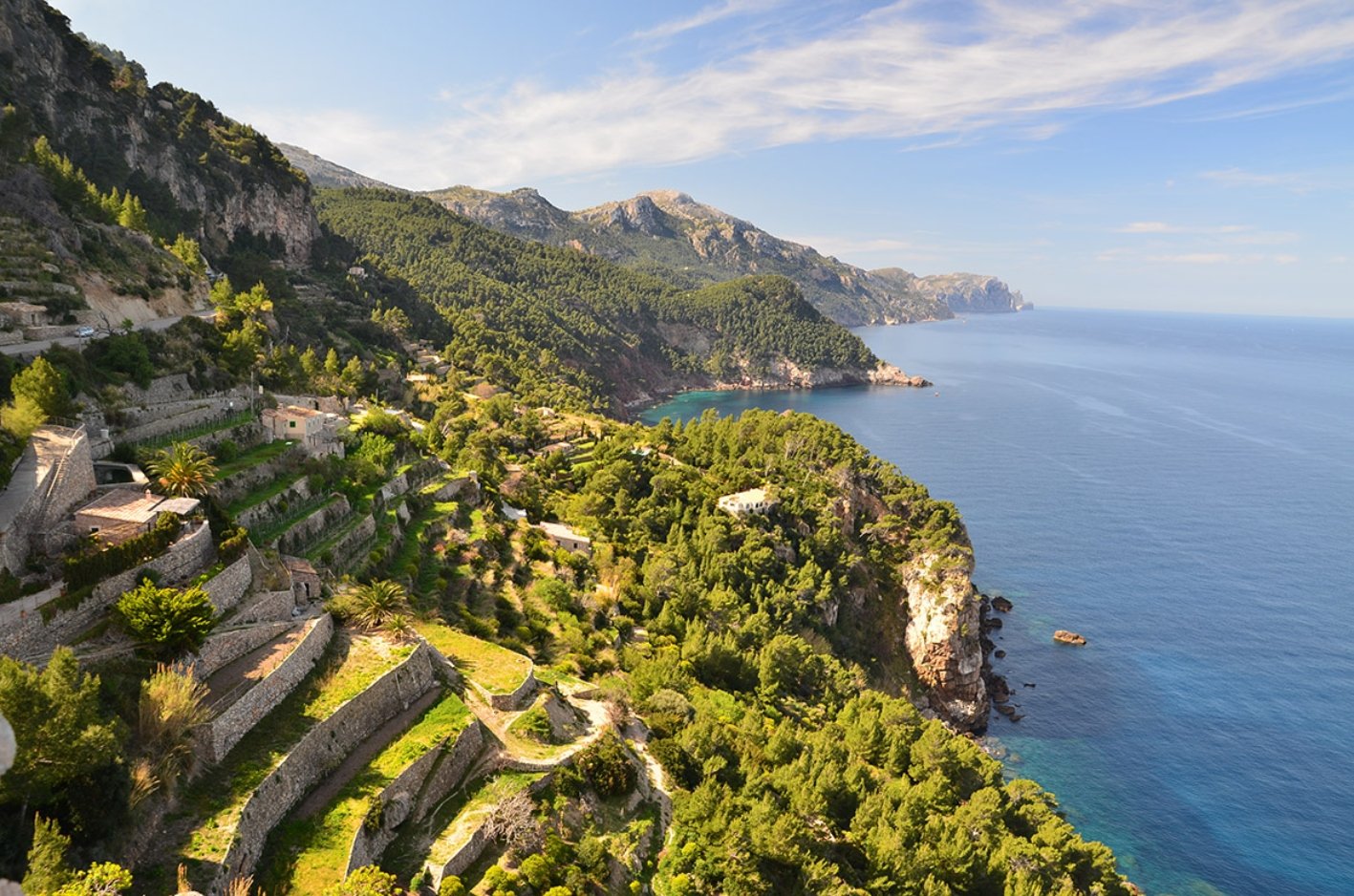
This mallorca island tour bus train tram and boat connects the historic villages of Valldemossa and Sóller through the Serra de Tramuntana mountains, a UNESCO World Heritage landscape. Travel by vintage wooden train from Palma, ride the century-old tram down to Port de Sóller, and return by boat along dramatic coastal cliffs, experiencing four distinct modes of transport in a single journey. The mallorca island tour bus train tram and boat tours combine mountain scenery, citrus groves, and Mediterranean shoreline with minimal walking required.
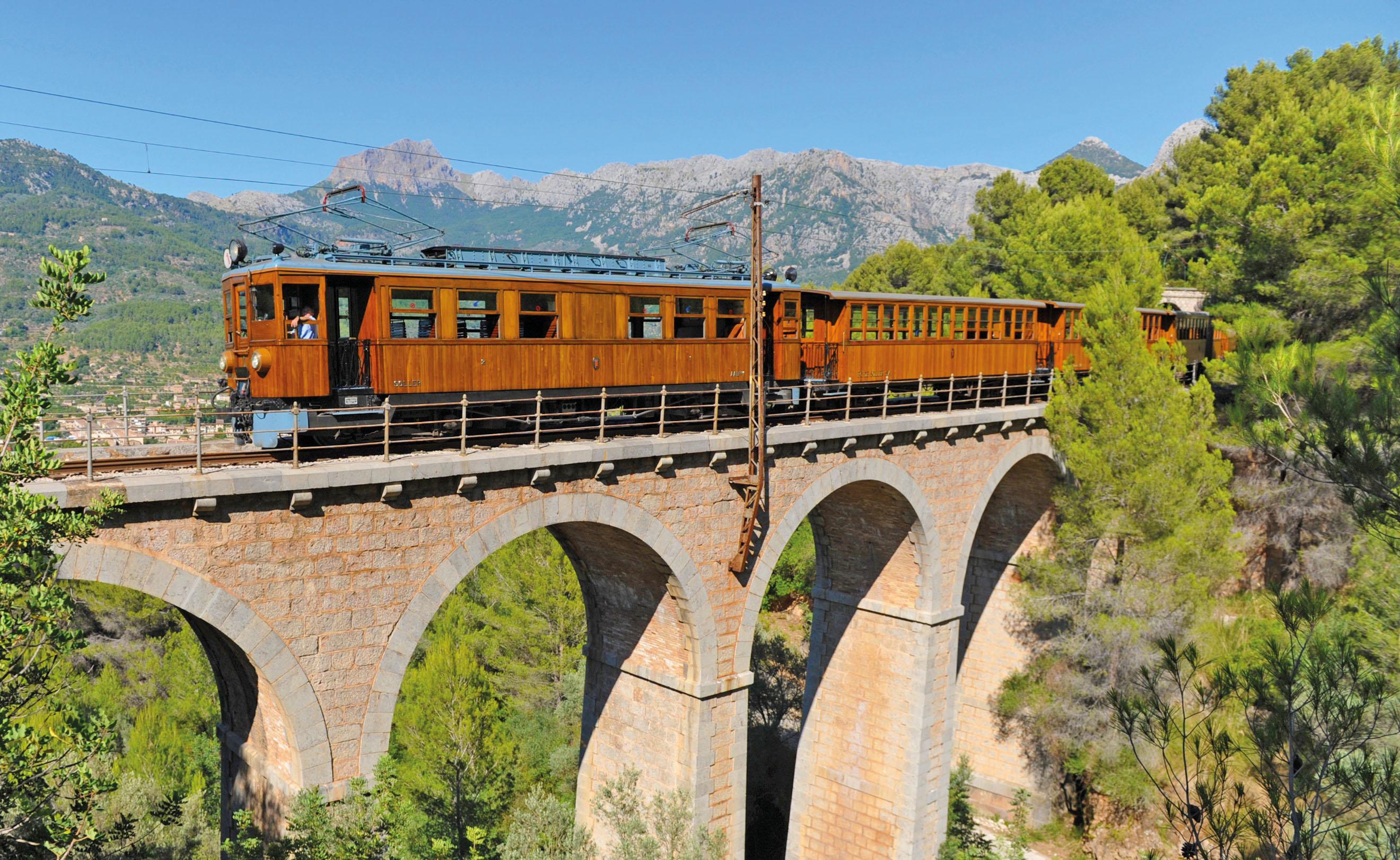
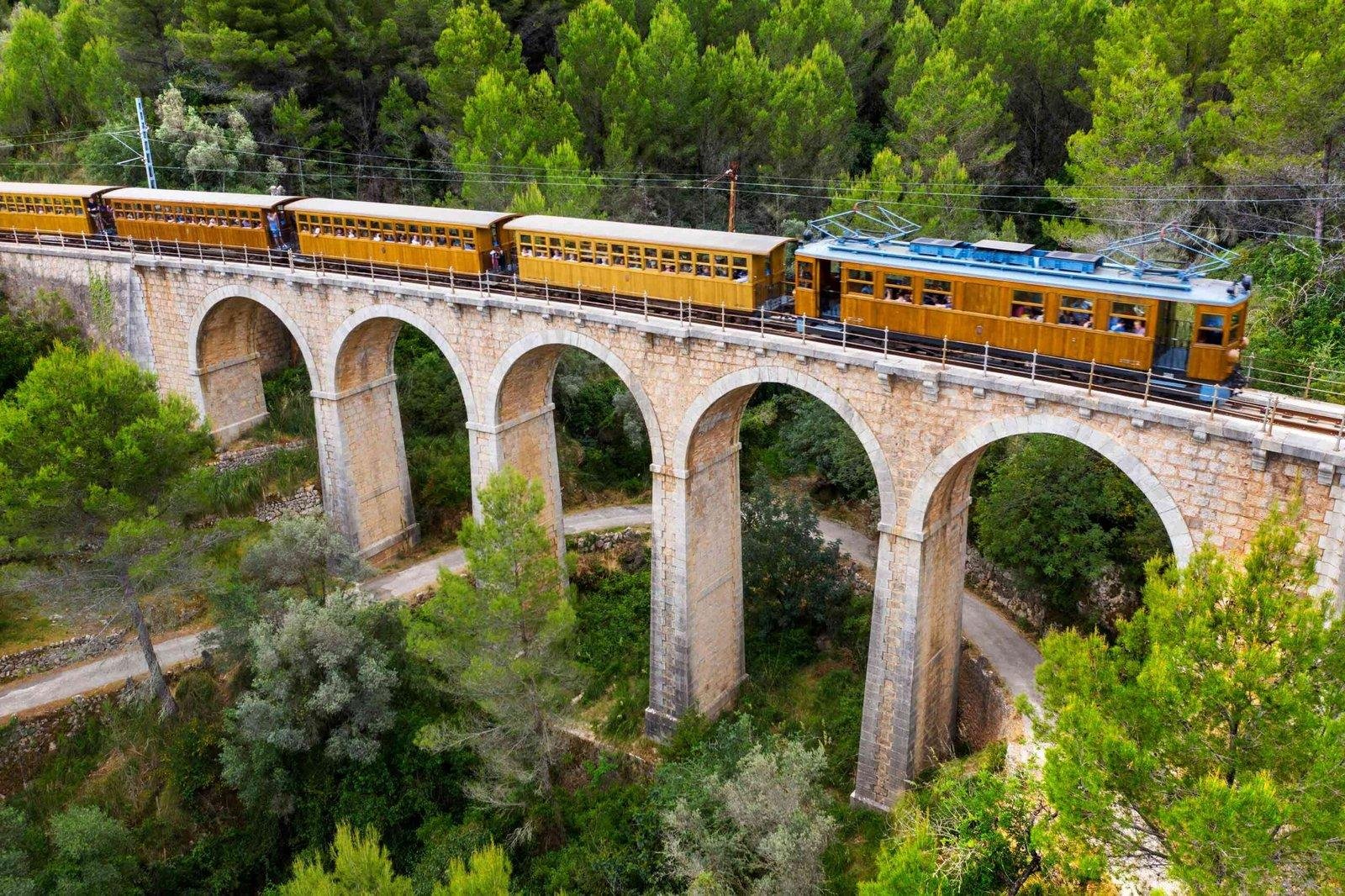
The narrow-gauge railway linking Palma to Soller opened in 1912 after thirteen years of tunneling through the Tramuntana range, its twenty-seven-kilometer route engineered by Joan Morell and Pere Garau to carry citrus exports from the valley to the capital.
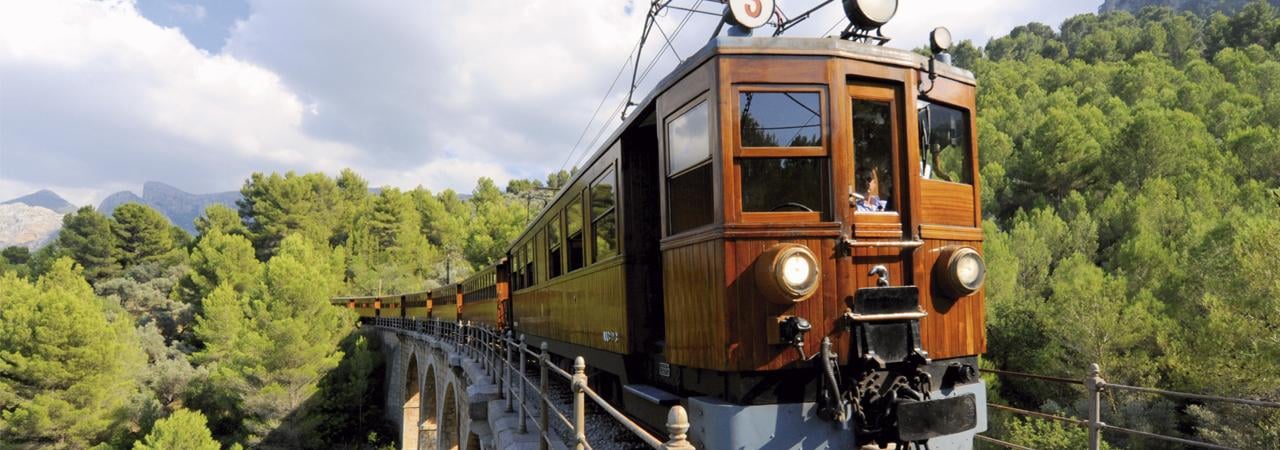
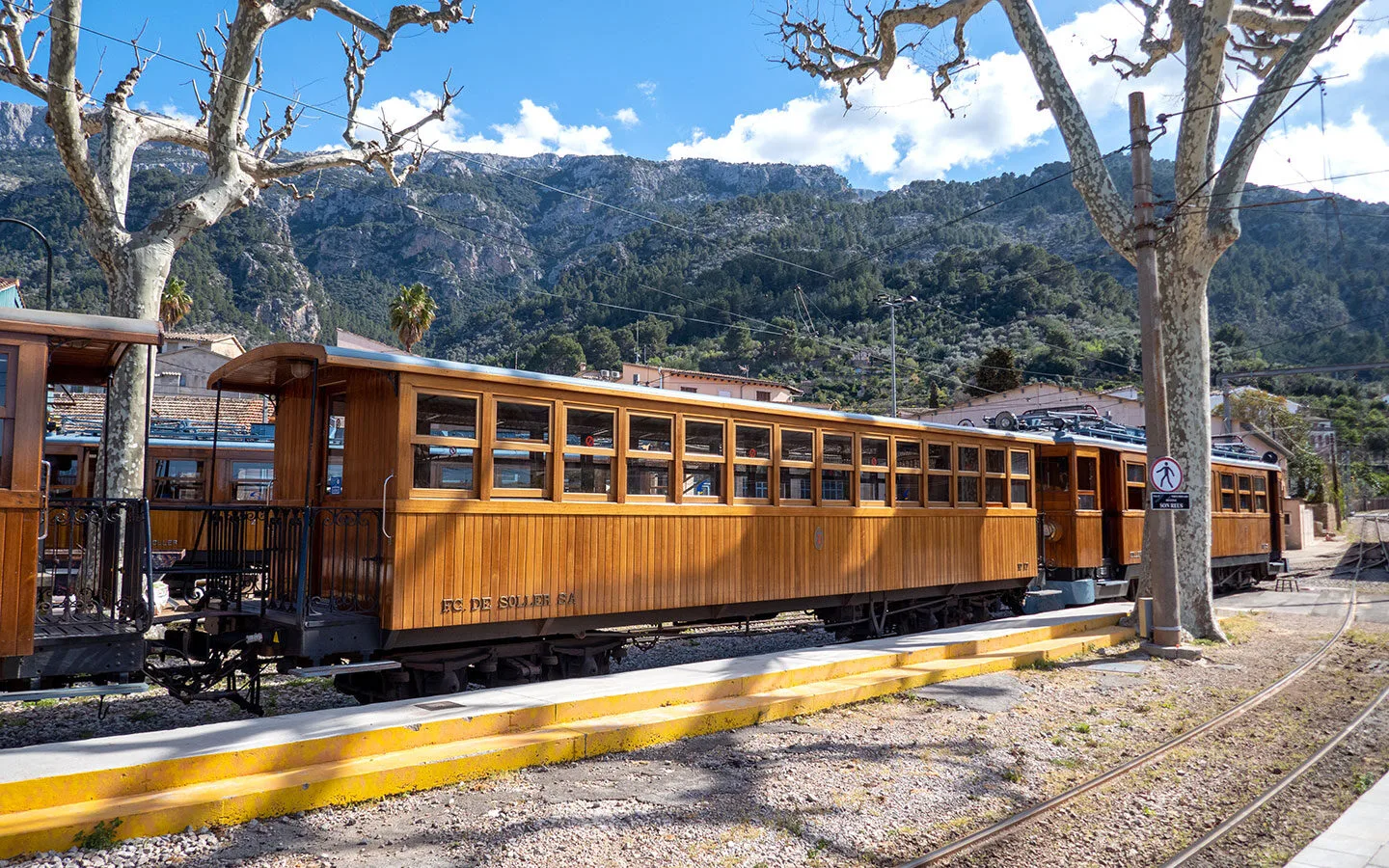
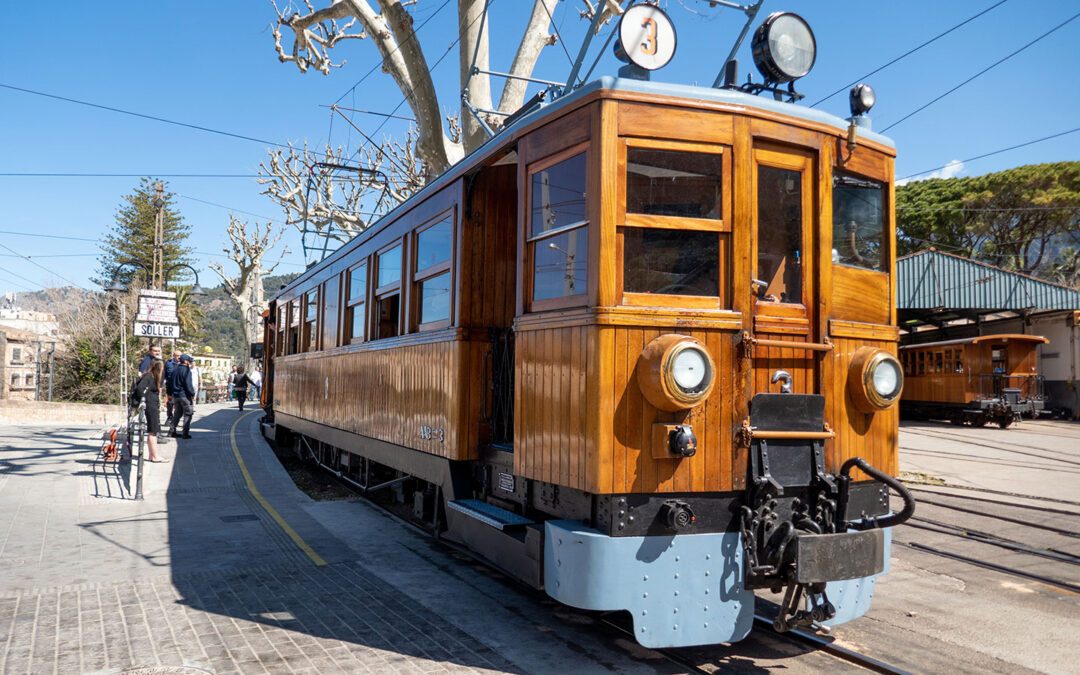
The wooden carriages and brass fittings remain original, their oxidized fixtures and leather straps intact after more than a century of service. The line climbs through thirteen tunnels and crosses the Cinc-Ponts viaduct before descending into Soller's orange-terraced basin, a gradient that once required steam locomotives to haul freight wagons at walking pace.
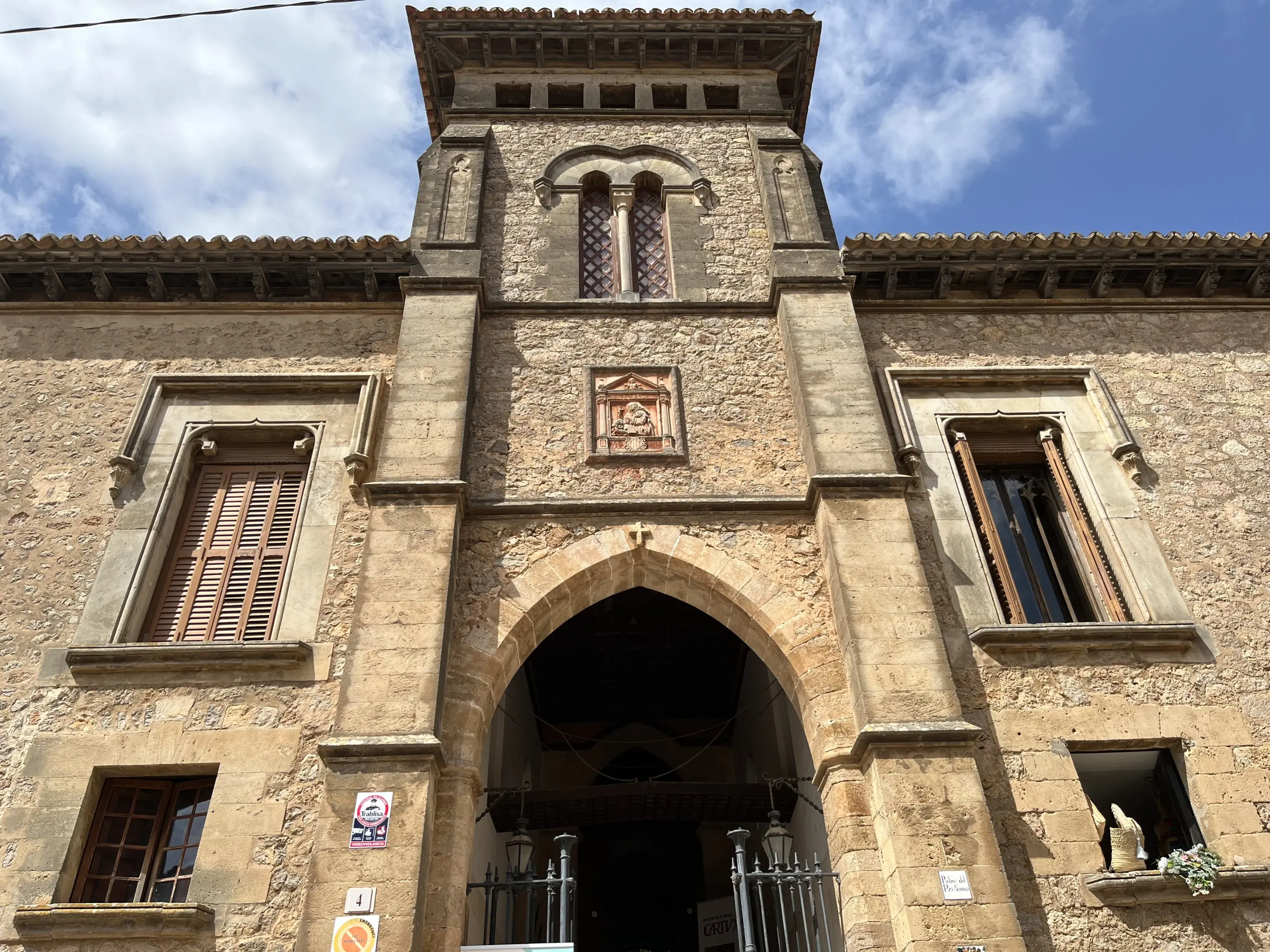
Valldemossa's Royal Carthusian Monastery, founded in 1399 and secularized in 1835, occupies a hillside terrace eight kilometers inland from the coast. Frédéric Chopin and George Sand spent the winter of 1838-39 in Cell 4, where Chopin completed his Preludes Op. 28 on a rented Pleyel upright shipped from Paris. The neoclassical pharmacy, lined with eighteenth-century majolica jars labeled in Latin, supplied tinctures to the cloistered monks until the final community departed in 1835. The jasper-paneled prior's cell and the vaulted corridors retain their original Mallorcan tilework, each geometric pattern cataloged by the island's ceramic guilds. Are there trains in Majorca? The Soller line remains the island's only operational passenger railway outside Palma's metro.
Can you get to Mallorca by boat? Regular ferry services operate year-round from Barcelona's World Trade Center terminal. How long is the boat from Barcelona to Mallorca? The overnight crossing takes seven to eight hours, arriving in Palma at dawn. Is there a ferry from Barcelona to Mallorca? Baleària and Trasmediterránea run daily departures, with high-speed daytime services completing the route in under four hours during summer months. How long is the ferry from Barcelona to Palma? The express catamarans dock at Palma's Estació Marítima within three hours fifty minutes under calm sea conditions.
The Mallorca island tour with boat tram and train from the south typically begins in Palma, ascending via coach through the stone-walled terraces of the Tramuntana foothills to Valldemossa before continuing to Soller. The vintage tram connecting Soller town to Port de Soller opened in 1913, its five-kilometer track threading through private gardens and lemon orchards along a coastal shelf. The combined Mallorca island tour bus train tram and boat itinerary emerged in the 1990s as operators linked the historic rail infrastructure with harbor excursions, creating a circuit that showcases the island's topography without retracing routes.

The wooden carriages and brass fittings remain original, their oxidized fixtures and leather straps intact after more than a century of service.
Casual comfortable clothing is recommended. Please dress respectfully as this is a historic monastery site.
Large backpacks and bulky luggage should be left at your accommodation. Security reserves the right to check all bags upon entry to the Cartoixa de Valldemossa.
Photography is permitted throughout most of the site for personal use. Professional equipment such as tripods or heavy lighting rigs requires prior authorization.
The complex offers educational resources for families. Children under 10 receive free admission when accompanied by an adult, making this a great stop for a family-friendly mallorca island tour bus train tram and boat excursion.
The site is located in a historic mountain village with steep, cobblestone streets. While the monastery grounds have some accessible paths, many areas contain stairs and uneven terrain.
Eating and drinking inside the monastery chambers is prohibited. There are numerous cafes nearby in the village of Valldemossa for refreshments.
Quietest period often before 12:00
Last entry usually 1 hour before closing
Opening Hours
Mon-Fri 10:00–17:00, Sat 10:00–16:00
Address
Plaza Cartoixa, 0, 07170 Valldemossa, Mallorca, Spain
Accessibility
Historic site with some uneven flooring and stairs
Arrival
Best arrival window: 10:00–15:00
Navigation
Use the official mobile app for self-guided beacon-assisted tours
Bus · 40 minutes · Approx. 3-5 EUR
Take the TIB bus line 203 from Palma to Valldemossa. Service is frequent throughout the day.
Car · 30 minutes · Parking fees apply
Follow the Ma-1110 route from Palma. Parking in village lots is recommended as street parking is limited.
General admission tickets are non-refundable once activated. Any refund requests for mallorca island tour bus train tram and boat tours must be processed at least 24 hours prior to the scheduled visit.
Recommended time
1.5-2 hours
Allocating two hours allows you to navigate the historic monastery at Plaza Cartoixa, 0, 07170 Valldemossa, Mallorca, Spain before continuing your mallorca island tour bus train tram and boat experience. When integrating this stop into a broader mallorca island tour bus train tram and boat tours itinerary, arrive early to avoid peak mid-day congestion. Securing your mallorca island tour bus train tram and boat tickets in advance helps maintain your schedule as the stone corridors of the Charterhouse draw significant foot traffic by noon. These local landmarks are best enjoyed when the stone courtyards are quiet, providing a peaceful contrast to the transit-heavy schedule of your journey.
Crowd levels through the day
Weather · crowds · average price — dots go green to amber to red as each metric rises.
Mild temperatures (18-24°C) with vibrant garden blooms and fewer crowds. Ideal for outdoor wandering.
Visit between 10:00–15:00 to escape peak crowds. This provides a calmer atmosphere for viewing the monastery art collections.
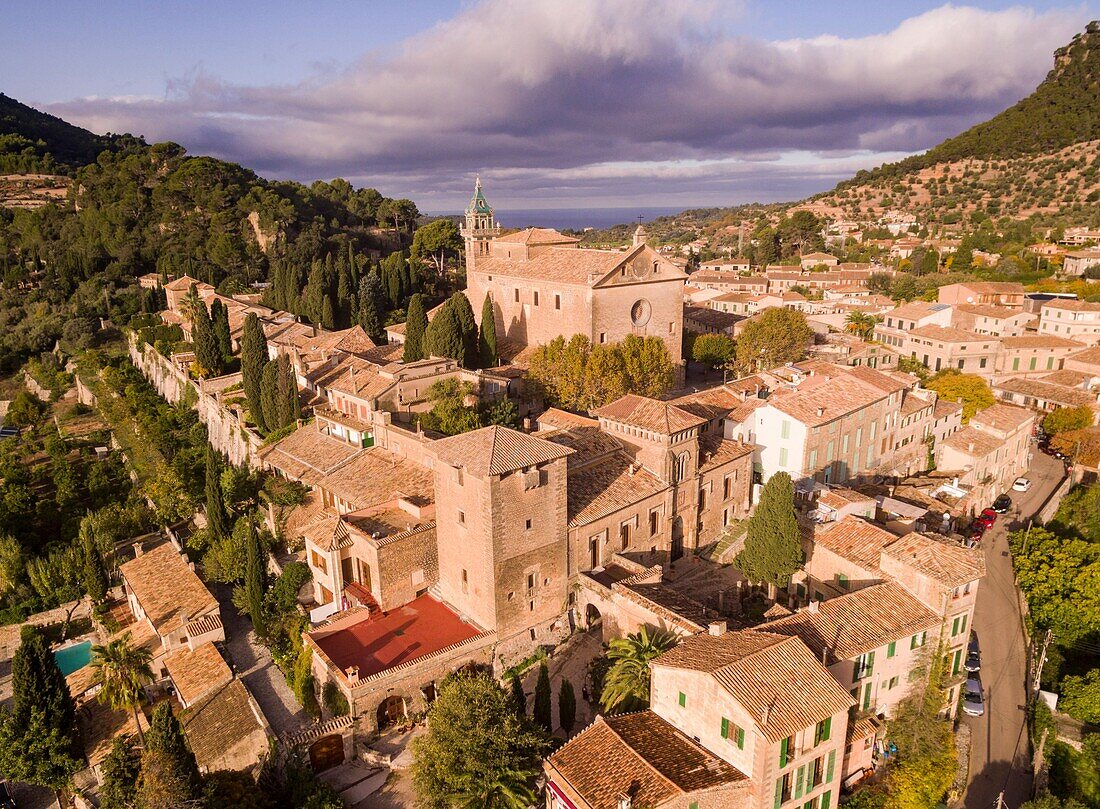
The Cartoixa de Valldemossa began as a royal palace commissioned in 1309 by King Jaume II of Aragon for his son Sancho. The original structure served as a residence for the Mallorcan royal family until Sancho's death in 1324, after which it fell into relative obscurity. In 1399, King Martí I transferred the property to Carthusian monks from Tarragona, who transformed it into a monastery and expanded the complex with cloisters, cells, and a pharmacy that would become one of Europe's finest. The Cartoixa survived nearly four and a half centuries of monastic life until Spain's 1835 Ecclesiastical Confiscations under Prime Minister Juan Álvarez Mendizábal, which dissolved religious orders and auctioned monastic properties. The Valldemossa monastery passed into private hands, its cells converted into rental apartments. This shift inadvertently preserved the structure and opened it to cultural tourism. The winter of 1838–1839 brought the Cartoixa international fame when French writer George Sand and Polish composer Frédéric Chopin spent a tumultuous season in Cell 4, a stay Sand chronicled in her caustic memoir *Un hiver à Majorque*. Chopin composed several preludes here, including the so-called "Raindrop" Prelude in D-flat major, on a Pleyel piano shipped from Paris. Today the Cartoixa de Valldemossa remains privately owned but operates as a museum complex that integrates mallorca island tour bus train tram and boat itineraries linking Valldemossa with Sóller via the historic wooden train. Visitors explore the neoclassical church with frescoes by Miguel Bayeu, the 18th-century pharmacy with ceramic jars from Talavera, the prior's cell, and the Chopin and Sand rooms displaying manuscripts and the composer's piano. The monastery anchors one of the island's most popular heritage routes, drawing tens of thousands annually to this Serra de Tramuntana village.
King Jaume II commissions a royal palace in Valldemossa for his son Sancho.
King Martí I transfers the palace to Carthusian monks, establishing the monastery.
Monks build the neoclassical church with frescoes by Miguel Bayeu, brother-in-law of Goya.
Spanish state dissolves the monastery under Ecclesiastical Confiscations; property sold to private owners.
George Sand and Frédéric Chopin spend winter in Cell 4; Chopin composes several preludes.
Cartoixa opens to the public as a museum, preserving monastic cells and cultural artifacts.
Serra de Tramuntana, including Valldemossa, inscribed as UNESCO World Heritage Cultural Landscape.
Position your camera low within the central courtyard to capture the symmetry of the stone arches framed by vibrant geraniums. This spot is a central highlight for those on the mallorca island tour bus train tram and boat.
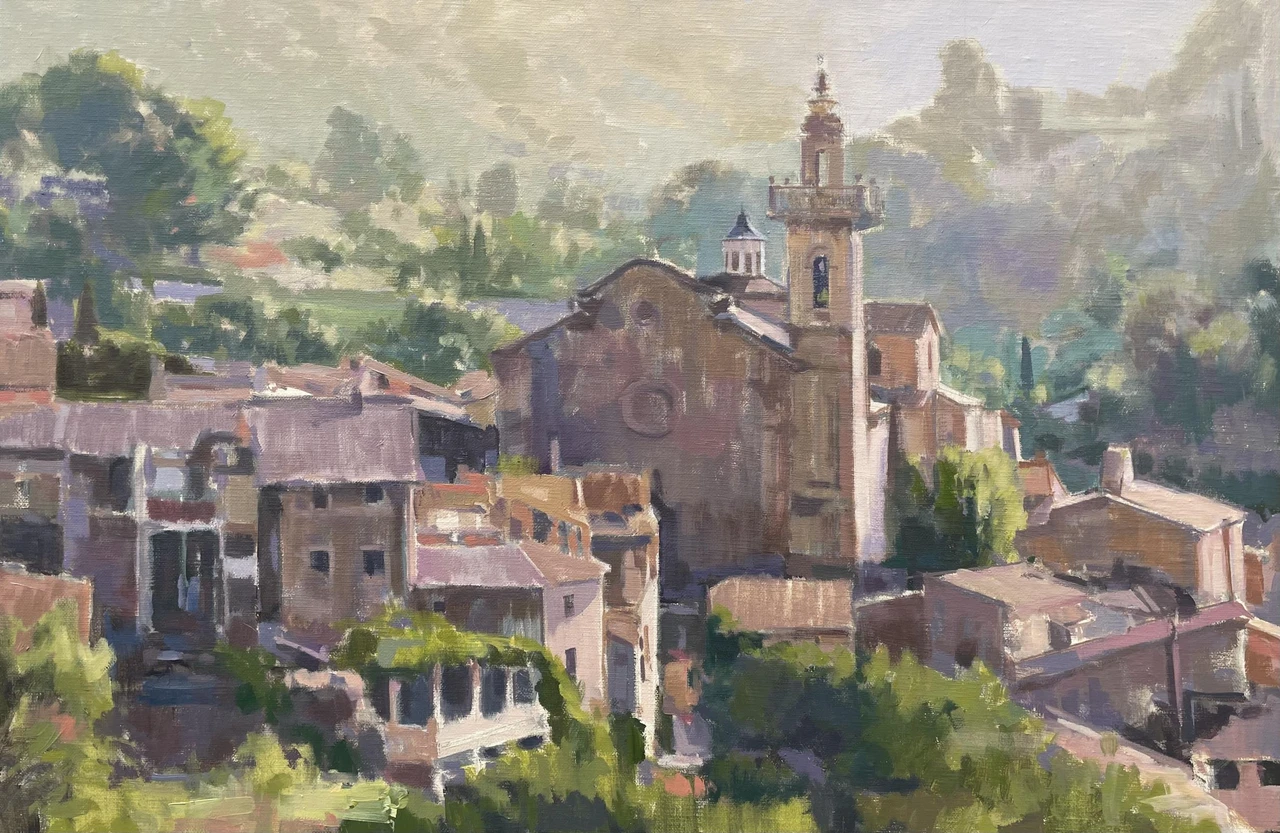
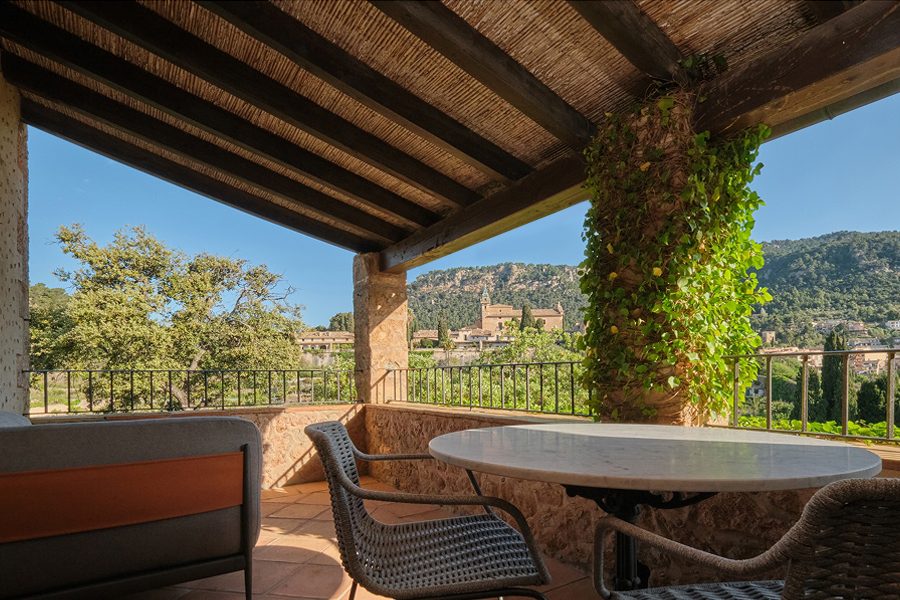
Stand at the edge of the stone terrace to frame the rustic rooftops of the village against the backdrop of the Serra de Tramuntana mountains. This perspective provides an authentic look at the architecture encountered during a typical Mallorca landmarks exploration.
Locate the viewing point overlooking the valley to capture the olive groves and terraced hillsides that define this UNESCO heritage landscape. This area is frequently included for travelers booking mallorca island tour bus train tram and boat tours.
Capture the intricate stone masonry and the historic wooden train carriages that serve as a classic backdrop for this mallorca island tour bus train tram and boat ticket holder favorite. The clean lines of the modernist architecture offer a distinct contrast to the rural village scenes found on your mallorca island tour bus train tram and boat tour.
Visitors pausing their mallorca island tour bus train tram and boat journey in Valldemossa will find charming cobblestone lanes filled with traditional bakeries and cafes. Many travelers opt for a quick coca de patata, a local potato pastry, while waiting for the next connection on their mallorca island tour bus train tram and boat tours.
Famous for authentic potato cakes and almond pastries, this historic bakery is ideal for a fast, local snack. Expect queues during the peak of the mallorca island tour bus train tram and boat ticket holders' arrival hours.
Real experiences from real travelers
We took the historic train from Palma through the Tramuntana tunnels, then transferred to the charming wooden tram that winds through Soller's orange groves. The boat trip from Port de Soller offered spectacular views of the coastline. Each mode of transport felt authentic and unhurried.
The mallorca island tour bus train tram and boat connected Valldemossa, Soller, and the port seamlessly. The vintage railway carriages retained original wooden interiors from 1912. We spotted terraced olive groves and stone farmhouses during the train segment. Port de Soller's harbor was calm enough to see the seabed through clear water.
Riding this transport combination showed us why the Soller railway was such an achievement. Thirteen tunnels carved through solid rock, some curves so tight you see the engine from rear carriages. The tram uses the same narrow gauge and connects directly at Soller station. Sea breeze on the boat was refreshing after the mountain journey.
The mallorca island tour bus train tram and boat took most of our day but we saw landscapes inaccessible by car. Tram driver pointed out century-old orange trees near the tracks. Boat captain navigated close to sea caves along the Tramuntana coast. Some sections felt touristy during peak hours.
Train gave us elevation views of Soller valley, tram brought us down to street level through the town, boat showed the mountains from sea perspective. Each segment revealed different architecture—Modernista station details, village squares with plane trees, fishing harbor with traditional llaüts. Weather was clear so we could see Puig Major from multiple angles.
We boarded the morning train from Palma and the wooden seats creaked pleasantly throughout the climb. Soller's tram stops right at the main plaza where locals were setting up the market. The boat portion along the coast passed small coves with turquoise water. Everything ran on time despite the vintage equipment.
The mallorca island tour bus train tram and boat tours preserve original 1913 rolling stock alongside modern safety features. Conductor explained how the train was electrified in 1929. Tram shares the street with cars in some sections which feels charmingly informal. Boat crew provided blankets since the sea breeze was cool even in June.
Riding the tram through Soller you smell orange blossoms from trees planted alongside the tracks. The train portion climbs through pine forests before descending into the valley. Port de Soller's waterfront has Art Nouveau buildings from the same era as the railway. We took photos from the boat looking back at the horseshoe bay.
The mallorca island tour bus train tram and boat connects three distinct environments using century-old infrastructure. Train tunnels are narrow enough that you feel the mountain's presence. Tram conductor rang the brass bell at every crossing. Boat followed the rocky coastline where you can see the Tramuntana range rising directly from the sea.
We avoided the winding mountain roads and let the train do the work. Soller valley appeared suddenly after the last tunnel, a green basin surrounded by peaks. The tram route passes residential streets where locals waved from balconies. Boat trip lasted about an hour with stops near Cala Tuent and Sa Calobra for photos.
Everything you need to know for your journey
The site is open Monday to Friday from 10:00–17:00 and Saturday from 10:00–16:00. It is closed on Sundays.
General admission is 12.5 EUR per person.
Booking online in advance is the best way to secure your mallorca island tour bus train tram and boat tickets and reduce waiting times at the entrance.
Due to the historic nature of the monastery and its mountain setting, some areas are difficult to navigate for those with mobility issues.
Yes, families are welcome. Children under 10 can visit for free, making it a great destination for a family-focused mallorca island tour bus train tram and boat visit.
We recommend the best arrival window: 10:00–15:00 to ensure you have enough time to explore before last entry.
Pets are generally not allowed inside the buildings, though service animals are permitted.
The site is located at Plaza Cartoixa, 0, 07170 Valldemossa, Mallorca, Spain.
Photography is allowed for personal use. Please be respectful of other visitors and the historical exhibits.
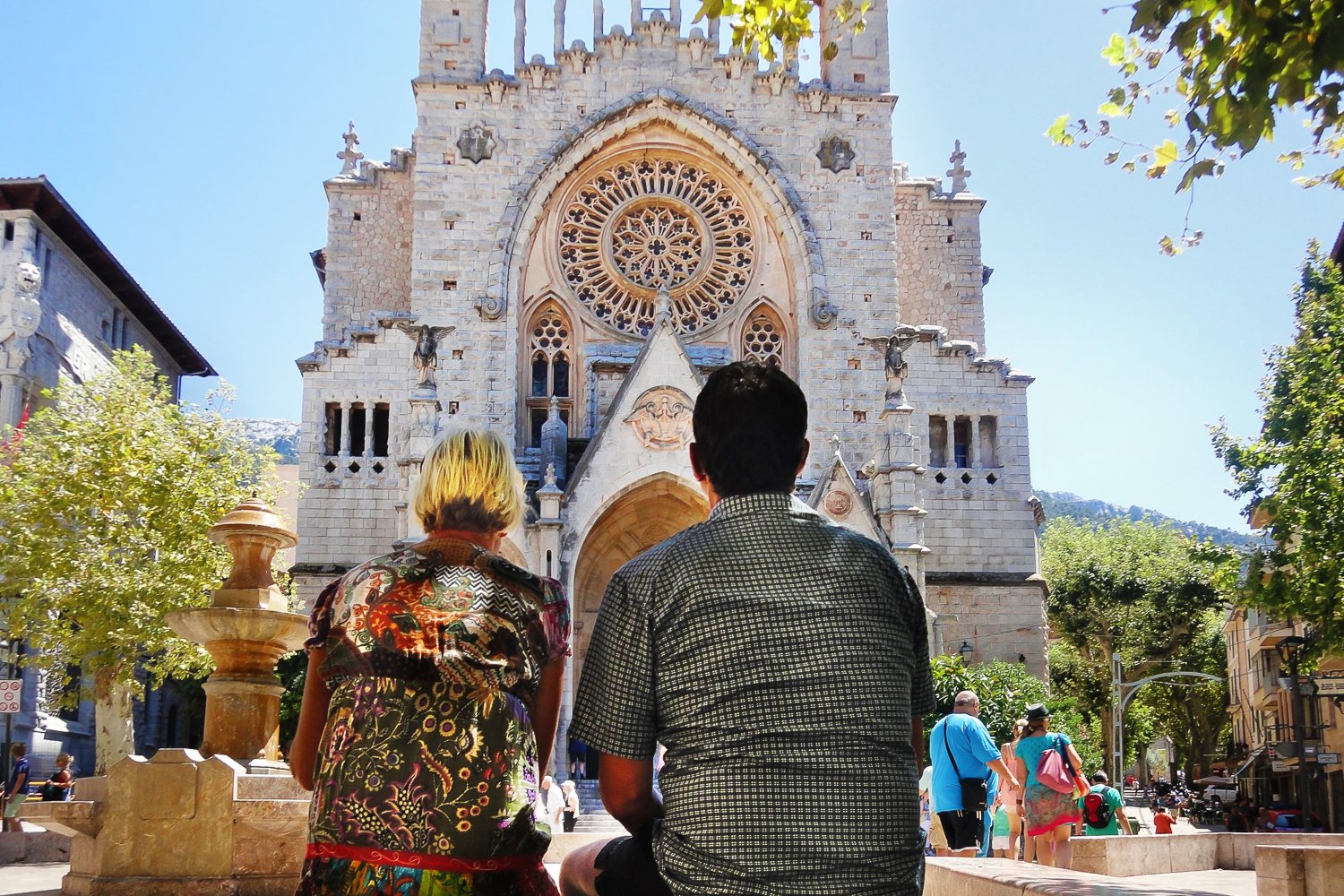
Beautiful historic church located in the center of the village.
Refined boutique hotel with mountain views.
Join thousands of happy travelers who have discovered this incredible experience
Book Your Experience Now